If your dog plays hard, their teeth take more damage than most owners realize. The nightly 20-minute fetch session, the chewed-on tennis ball by the back door, the knotted rope you tug across the kitchen floor every evening. All of it is good for your dog in almost every way, except for one. The mouth is paying for the fun.
I love active dogs. I have one. The point of this piece is not to tell you to stop playing. The point is that if play is a daily part of your dog's life (and it should be), then a nightly dental routine is not optional. It is the thing that keeps the mouth catching up to the day.
Here is what is actually happening when your dog plays, what the specific risks look like by play type, and the one 60-second routine that lets a hard-playing dog keep their teeth intact at age 12.
The 60-Second Answer
Three things wear a dog's teeth down faster than most owners expect. The first is abrasion from fibrous or gritty materials, with tennis balls being the single worst offender in the retail play category. The outer felt on a tennis ball is woven with microscopic silica fibers that act like sandpaper on canine enamel. A dog who carries or chews on tennis balls daily for years can wear the crown surface of the canines and premolars down to the pulp cavity, which is the vascular center of the tooth. By that point the tooth needs extraction.
The second is slab fractures, which happen when a dog bites down hard on something firmer than their enamel. Antlers, bones, nylon chews branded as "tough," ice cubes, and large sticks are the common culprits. A slab fracture usually hits the upper fourth premolar (the big slicing tooth on the side), splits off a chunk of the crown, exposes the pulp, and requires a root canal or extraction. The American Veterinary Dental College lists slab fractures as the single most common dental trauma they treat.
The third is micro-trauma to the periodontal ligament from repetitive tug-of-war and bite-and-pull play. The tooth is suspended in its socket by a shock-absorbing ligament. Every tug on a rope toy loads that ligament. Done occasionally, it is fine. Done daily for years, it inflames the surrounding tissue in exactly the pocket where periodontal disease starts.
What to do about it: match the toy to the risk, do a 30-second visual check of the mouth once a week, and run a 60-second nightly dental routine that lets the enamel repair the micro-damage of the day. Done consistently, play and dental health coexist. Done inconsistently, you will be looking at a $1,500 extraction bill by age 7.

Tennis Balls: The Daily Wear Nobody Thinks About
This is the one that catches owners off guard, because tennis balls look soft. The problem is not the softness. It is the surface.
Tennis balls are coated in a wool-and-nylon felt that is woven with trace silica particles for grip and durability on the court. Silica is quartz. On the Mohs hardness scale, silica sits at 7. Canine enamel sits around 5. The felt is harder than the tooth. A dog who carries a tennis ball in their mouth for 30 to 60 minutes a day over several years is running microscopic sandpaper across the exact occlusal surface of the canines and the premolars.
What this looks like on a vet dental exam, by age 6 or 7, is flattened canine tips, worn-down premolar cusps, and in advanced cases, exposed dentin on the inside surface of the upper canines. Exposed dentin is sensitive. It is also structurally weaker than enamel and much more vulnerable to decay from oral bacteria. Once the enamel is gone it does not grow back on its own, and this is where the daily nightly recovery routine stops being optional.
None of this means stop playing fetch. It means stop using fluorescent-yellow tennis balls as the default retrieve toy. Rubber Chuckit balls, Kong rubber retrievers, or any of the dedicated dog fetch balls (smooth rubber or textured rubber without a felt coating) do the job without the abrasion. Save tennis balls for the court.
The Slab Fracture Problem
This one is less about daily wear and more about one bad bite. The rule is simple: if you cannot press a thumbnail into the surface of what you are giving your dog to chew on, it is harder than their enamel, and sooner or later it will crack a tooth.
The specific culprits, in order of how often I hear about them from owners:
Antlers. Beloved by many dogs, geologically dense, and responsible for a significant share of upper fourth premolar fractures. I understand why owners like them. They last for weeks. The reason they last for weeks is also the reason they fracture teeth.
Nylon "indestructible" chews. The hard version of these (not the softer flex-style ones) is one of the worst slab-fracture risks on the market. If the chew has texture molded into the surface and feels like a plastic hammer, do not give it to your dog.
Raw knuckle bones and marrow bones. Veterinary dentists are nearly unanimous that recreational bones are not worth the fracture risk. The nutritional argument for them is thin. The dental argument against them is overwhelming.
Ice cubes. Dogs love them in summer. They are also extremely hard. An ice cube bitten the wrong way can slab-fracture a premolar in a single incident. Give crushed ice or small chips if the dog needs the enrichment, not full cubes.
Large wooden sticks. Fracture risk from the biting pressure, plus a secondary risk of splinter wounds in the soft palate and tongue. The chewed-stick-by-the-back-door is a cheap toy for an expensive problem.
What is safe: rubber Kongs (classic Kong rubber is the gold standard), smooth rubber retrievers, braided rope toys (within reason, see tug section below), and soft rubber tug toys. The thumbnail test gives you a 90 percent accurate pre-screen. If you cannot indent it, your dog's enamel cannot either.
Tug and the Periodontal Ligament
Tug-of-war has a bad reputation it does not deserve. It is a great form of enrichment, builds impulse control (via the "drop it" cue), and burns real mental energy. The dental caveat is specific and manageable.
Each tooth sits in its socket suspended by a thin shock-absorbing structure called the periodontal ligament. The ligament distributes bite forces, holds the tooth in place, and (importantly for dental health) is intimately connected to the gum tissue that forms the first line of defense against bacteria. Repetitive high-force tugging loads the ligament in the direction of pulling. Done moderately, this is biomechanically fine. The ligament is designed to handle it.
Where it goes wrong is daily tug sessions of 15 to 30 minutes of hard pulling, especially in dogs who already have mild gingivitis. The combination of inflamed gum tissue plus repeated ligament loading creates a small amount of chronic micro-trauma right at the gum line. Over years, this accelerates the periodontal pocket deepening that drives disease progression.
The fix is not to stop tugging. The fix is to do shorter sessions, let the dog "win" sometimes (which lets the ligament reset between pulls), and avoid tug entirely if your dog is already showing visible gingivitis until the gum inflammation is under control. A rope toy is also better than a hard rubber tug for this reason: the rope gives a tiny amount, which absorbs some of the peak force.

Why the Nightly Routine Matters More for Active Dogs
This is the piece most owners miss. The question is not whether play causes micro-damage. It does. The question is whether the mouth gets a chance to recover overnight. If the answer is yes, play is sustainable for the life of the dog. If the answer is no, the damage compounds, and by age 7 or 8 the vet is pulling teeth.
Enamel repair in a dog's mouth happens continuously at the microscale, through a process called remineralization. Saliva carries calcium and phosphate ions, which continuously deposit back onto the tooth surface and refill the microscopic damage caused by acids, abrasion, and mechanical wear. The process works. It just works slowly, and it works best when the mouth is not actively being bombarded with new sources of damage during the recovery window.
Overnight, when the dog is asleep, is the longest uninterrupted remineralization window of the day. The mouth is quiet. Saliva is still being produced (reduced flow, but continuous). This is the window where a dental routine does the most work.
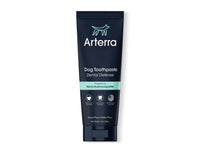
The nightly routine is three things, in order. First, a dental chew after the evening meal, which mechanically disrupts the plaque that accumulated during the day's eating and playing, and delivers nano-hydroxyapatite particles that start seeding the enamel repair. Second, if you can get it in, 30 seconds with the Remineralizing Dog Toothpaste on a finger brush, which brings the nano-hydroxyapatite into direct contact with the enamel surface across the whole mouth. The nHA particles are 20 to 80 nanometers across, small enough to slot into the exact microscopic enamel damage that fetch and chewing create. Third, let the dog sleep. The repair happens during that quiet window.
For an active dog, this is not a nice-to-have. It is the recovery step that lets the daily activity level be sustainable. Skip it and the micro-damage of each day's play accumulates without a counterweight. Do it, and the mouth stays repair-dominant instead of damage-dominant.
What Active-Dog Owners Notice
Karen owns a Golden Retriever, the archetypal active breed. Her note on the chews:
"My Golden loves the taste of them."
Karen Foster, verified subscriber
Short, but the detail that matters is the breed. Goldens are chewers. They are also notoriously picky with "dental" treats because so many of them have the sprayed-on palatant taste that an experienced chewer recognizes as not-really-food. A Golden eating the chews without hesitation is a chew whose base recipe reads as actual food to a dog's nose.
And from Debbie, with Nova (an active-dog name if ever there was one):
"I've had my Nova on these for about a week now and I've noticed that his breath is now so much better and his teeth are a bit brighter. I'll be back with another update as time passes."
Debbie, verified subscriber
The one-week breath change is the mechanical disruption of accumulated plaque plus the start of microbiome shift. The "teeth a bit brighter" is the start of the enamel surface repair. Both of those are the recovery process doing its work on an active dog's mouth. More than 22,500 dogs are now on a daily Arterra routine, and the active-dog owners are the ones who tell us most consistently that it is the piece they wish they had added years earlier.
Play-Related Mistakes I See Most Often
Using tennis balls as the default fetch toy. The felt is sandpaper. Switch to rubber. If your dog is already a tennis-ball dog, your vet should be checking crown wear at every annual exam.
Giving antlers because they last forever. They last forever because they are harder than enamel. The upper fourth premolar pays the price.
Daily hard-tug sessions on a dog with visible gingivitis. Address the gingivitis first. Light tug is fine; sustained hard tugging on inflamed gum tissue accelerates pocket formation.
Ice cubes in the water bowl in summer. Great idea, dangerous execution. Use crushed ice or small chips.
Skipping the nightly routine on days the dog played hard. This is backwards. The hard-play days are the ones where the nightly routine matters most, because the micro-damage load is highest and the recovery window is more important than usual.
Treating a chewed-up tennis ball as "safe because it's soft." A chewed tennis ball is also a choking and intestinal-obstruction risk if pieces of the felt or rubber are swallowed. Retire them when they start to break down.

Match the Recovery to the Play
For the fetch dog who plays 20 to 40 minutes a day: switch to rubber retrievers if you have not already, and run the nightly dental chew after the evening meal, every evening. The chewing action after a day of carrying things in the mouth gives the jaw muscles a productive end-of-day task and the plaque disruption lines up with the longest remineralization window.
For the tug dog: keep sessions short, let the dog win, and layer in the Remineralizing Toothpaste three to four nights a week on a finger brush along the gum line. The nHA repair is most valuable right where the ligament micro-trauma concentrates.
For the big-chewer, destroys-everything dog: audit the toy pile this weekend. If anything in it fails the thumbnail test, pull it. Replace with Kong classic rubber, smooth rubber retrievers, or braided rope toys. Then the nightly chew is the active recovery piece, not a counterweight against a toy that will slab-fracture a tooth tomorrow.
And for every active dog regardless of play style: book the annual dental exam with your vet, and specifically ask them to check for crown wear patterns on the canines and premolars. A vet who sees your dog once a year can catch wear years before it becomes a problem that needs extraction.
🦴 Longevity Insights
-
Play is good. The specific toys matter. Switch tennis balls for rubber retrievers, antlers and hard nylon for Kong classic rubber, large sticks for braided rope.
-
The thumbnail test takes two seconds. If you cannot press your thumbnail into it, your dog's enamel cannot either, and it is a slab-fracture risk.
-
Enamel repairs itself overnight if you let it. The 60-second nightly routine is what makes a day of hard play sustainable for the life of the dog.
-
The nightly chew is the active recovery piece. The Dog Dental Chews disrupt the day's plaque buildup and deliver nano-hydroxyapatite particles that seed enamel repair during the overnight remineralization window.
-
Pair it with the nHA toothpaste a few nights a week. The Remineralizing Dog Toothpaste brings the active particles into direct contact with the whole enamel surface. 30 seconds on a finger brush, after the chew, before bed.
-
Hard-play days are when the nightly routine matters most, not least. Skipping on the active days is backwards.
This article is for educational purposes and is not medical advice. If your dog has a chipped or fractured tooth, visible crown wear, chronic bad breath, or bleeding gums, book an exam with your licensed veterinarian. Dental fractures do not heal and typically need treatment within weeks to avoid pulp infection.
Tags:
Active Dogs,
Daily Routine,
Dental Chews,
Dental Health,
Enamel,
Play,
Slab Fracture