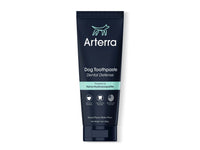
As dog owners, we want the best for our pets' health - especially when it comes to something as important as their dental care. With nano-hydroxyapatite (nHA) gaining massive popularity in human oral care products (it's now a top ingredient in many best-selling toothpastes on platforms like Amazon), it's natural to wonder: Is nano-hydroxyapatite safe for dogs?
The short answer, yes, it is safe for dogs! At Arterra Pet Science, we're proud to be pioneers in bringing this breakthrough mineral to canine dental chews. Our products use veterinarian-formulated, dog-specific formulations featuring rod-shaped nano-hydroxyapatite to support enamel strength and overall oral health. But safety comes first. Let's break down the science, address common questions, and clear up misconceptions with transparent, evidence-based information.
What Is Nano-Hydroxyapatite, and Why Use It for Dogs?
Hydroxyapatite makes up about 97% of the mineral content in teeth and bones - it's the natural building block of enamel. The nano form consists of tiny particles that can reach and support remineralization on the tooth surface more effectively than larger particles.
In human toothpaste, nHA is celebrated for helping strengthen enamel without fluoride. For dogs, it offers similar potential benefits in a dental chew format: supporting healthy teeth as part of daily dental care. Importantly, our dog dental chews are designed specifically for dogs, with no harmful additives.
The #1 Rule: Never Use Human Products on Dogs
A frequent concern we see in searches is around human nHA toothpastes. While nHA itself is the focus here, many popular human toothpastes containing it also include xylitol - a sweetener that's extremely toxic to dogs, even in small amounts. It can cause rapid drops in blood sugar, liver failure, and worse.
Bottom line: Human oral care products are not safe for dogs due to ingredients like xylitol. Always choose pet-specific formulations like ours, which are free of xylitol and other dog-toxic substances.

Addressing Nano-Specific Safety Concerns
Some pet parents worry about "nano" particles migrating to places like the lungs or brain, based on older rodent studies. These concerns are valid to explore, but the details matter a lot.
Key studies raising flags often involved:
- Extremely high doses (far beyond what's in a daily chew).
- Non-oral routes (like injection or inhalation).
- Needle-shaped particles (sharp and higher surface area, linked to more cellular stress).
In contrast:
- Rod-shaped nHA (the form we use) shows significantly better compatibility in research - lower inflammation, less cellular uptake issues, and no notable toxicity in relevant models.
- Oral exposure studies in rodents (including long-term, year-long feeding trials) found no adverse effects on body weight, organ function, blood parameters, or histopathology - even at chronic doses.
- In simulated gastric fluid (mimicking stomach conditions), nHA particles dissolve rapidly into calcium and phosphate ions - natural body components - with no nano-specific absorption concerns.
The European Union's Scientific Committee on Consumer Safety (SCCS) - a rigorous body similar to aspects of FDA review for cosmetics - has evaluated rod-shaped nano-hydroxyapatite extensively. Their opinions confirm it's safe for oral use in toothpastes at relevant concentrations, specifically for rod-shaped particles meeting strict criteria (e.g., aspect ratios mostly under 3, no coatings). Needle-shaped forms are explicitly not recommended.
Veterinary studies in dogs (e.g., using nHA in bone regeneration or socket preservation) have shown good biocompatibility - no serious adverse reactions like infection, immune rejection, or systemic issues.
For our chews: We source rod-shaped nHA on the larger end of the nanoscale (still nano, not micro), third-party test every batch for identity, size, and shape, and formulate at levels aligned with safety data. Out of abundance of caution, our products are vet-formulated and manufactured in the United States.
No Evidence of Harm in Relevant Use
To date, no studies show health concerns with rod-shaped nHA in oral pet applications at typical doses. Ingestion in chews leads to dissolution in the stomach, not systemic nano-particle circulation. This aligns with broader biocompatibility data for hydroxyapatite in animals, including dogs.

Why We're Confident in Our Approach
We're not making medical claims - our dental chews support healthy teeth and gums as part of a daily routine, alongside vet-recommended care like brushing when possible. They're not a substitute for professional veterinary advice.
If you're concerned about your dog's dental health or introducing new supplements, consult your vet. Many are excited about nHA's potential as a fluoride-free option.
At Arterra, we believe in science-backed, transparent pet wellness. Our goal is simple: happier, healthier dogs with fresher breath and stronger smiles.
Questions? Reach out - we're here to help.
Jonathan Willbanks, Founder
Arterra Pet Science
Tags:
Dental Health,
Science