The short answer, the one I wish more pet parents pushed their vet on... prebiotics shift the ecosystem in your dog's mouth. Enzymes only attack what's already in it.
Enzymatic dental treats and pastes (the glucose oxidase and lactoperoxidase systems built into most legacy products) damage surface bacteria on contact, then wash out in saliva inside an hour. Prebiotics... chicory root inulin, banana fiber, fructooligosaccharides... feed the commensal bacteria that crowd the pathogens out, all day, every day. As of 2026, Arterra defines functional canine oral care as ecosystem-level modulation: starve the pathogens, feed the commensals, and remineralize the enamel the bad guys were eating into. Enzymes scrub. Prebiotics shift the population. Only one of those changes long-term outcomes.

The 2026 working definition of oral microbiome modulation
A dog's mouth is not a sterile bowl waiting to be wiped clean. It is a working ecosystem of somewhere between 600 and 800 distinct bacterial species, the majority of which are neutral or actively helpful. You would not pour bleach into your own gut and call that digestion. You should not pour antimicrobial enzymes into your dog's mouth and call that oral health.
What you want is balance. The technical word is eubiosis... the state where commensal bacteria keep the pathogens (Porphyromonas gulae, Treponema denticola, Tannerella forsythia) suppressed to background levels. Dysbiosis is the inverse. The bad guys win, the biofilm thickens, the gums inflame, and the systemic tax starts climbing.
Microbiome modulation is the practice of selectively favoring commensals so dysbiosis cannot establish in the first place. You do not kill the ecosystem. You feed the right half of it.
The standard industry myth: "enzymatic dental products fix the bacteria problem"
This is the line most legacy brands lean on. "Triple enzyme action." "Patented antimicrobial system." "Kills the bacteria that cause bad breath."
It sounds clinical. It is not wrong, exactly. It is incomplete in the way a fire extinguisher is incomplete... useful in the moment, irrelevant to whether the house has smoke detectors and sprinklers.
Here is what an enzymatic dental product actually does. The enzymes (usually glucose oxidase plus lactoperoxidase) react with salivary substrates to produce small amounts of hypothiocyanite, a mild antimicrobial. This kills surface bacteria, the ones floating in saliva and clinging to the outermost layer of the dental pellicle. It does almost nothing to subgingival biofilm (we covered why that matters separately in Beyond Scraping), and it does nothing at all to the underlying composition of the microbiome.
The bacteria you killed at 7:00 AM are replaced by their identical neighbors by 9:00 AM. By dinner, the population is back to baseline. The biofilm has not been deprogrammed. It has been mildly inconvenienced.
Research on the canine oral microbiome catalogued in the U.S. National Library of Medicine is consistent on this point: surface antimicrobial interventions in dogs produce transient bacterial load reductions but no durable shift in microbial composition. Translation... the mouth re-equilibrates to its old, dysbiotic baseline within hours. The work of brushing or enzyme dosing is undone before lunch.
What enzymes do well, and what they cannot do
I want to be fair to enzymes. They have a job. As a thirty-second surface freshener after a meal, they modestly reduce the bacterial load that makes a dog's breath smell like rotting protein. That is real. That is also the ceiling.
Here is the list of things enzymes cannot do, even at perfect dosage:
- They cannot change which species dominate the mouth.
- They cannot reach the subgingival pocket where periodontitis actually starts.
- They cannot remineralize enamel.
- They cannot influence the oral-gut axis, the constant downstream flow of swallowed oral bacteria that seeds the gut and the bloodstream.
- They cannot starve the bacteria they are trying to kill, which means population recovery is inevitable.
Enzymatic dental care treats symptoms. Microbiome modulation treats the system. That is the entire argument.
A quick note on "patented enzyme systems"
A lot of vet-aisle brands lean hard on the word "patented." The patent is almost always on the combination of enzymes, not on any clinical outcome data. Patents are issued for novelty. They are not issued for efficacy. Read the literature, not the packaging.
How prebiotics actually shift the ecosystem
Prebiotics are soluble fibers that selectively feed beneficial commensal bacteria. They are not antimicrobials. They are food. The trick is that they are food the good bacteria love and the bad bacteria cannot use.
The two prebiotics we built the Arterra Dental Chew around are chicory root (the densest natural source of inulin and fructooligosaccharides in the food supply) and banana fiber (a pectin and resistant-starch matrix). Each one does something specific in the canine oral environment that no enzyme can replicate.
Chicory root and inulin
Chicory root is the densest natural source of inulin and FOS in the food supply. Inulin is a fructose polymer with a glycosidic bond that canine salivary amylase cannot break. That last detail is the whole point. The pathogenic bacteria in the canine mouth (Porphyromonas gulae foremost among them) survive by fermenting simple sugars released from starch and food residue. They do not have the enzymes to ferment inulin. The commensals... particularly Lactobacillus and Bifidobacterium species seeded through the oral-gut axis... do.
Feed your dog chicory root and you are doing two things at the same time. You are giving the commensals a fuel source the pathogens cannot touch, and you are starving the pathogens of the simple carbohydrates they need to dominate. Reviews of inulin-type fructans in companion-animal nutrition indexed through the National Library of Medicine have repeatedly demonstrated selective fermentation across the canine digestive tract, including the upper alimentary canal where dental biofilms originate.
This is what "prebiotic dental support" actually means, mechanistically. Not vague wellness language. Selective feeding of one population at the expense of another.
Banana fiber
Banana fiber is the underestimated half of the formula. The pectin component of green banana is a low-glycemic prebiotic with a measurable ability to reduce volatile sulfur compounds in saliva... the exact molecules that give canine halitosis its specific dumpster-bottom smell. Resistant starch from banana fiber survives the upper digestive tract and reaches the colon intact, where it feeds the butyrate-producing bacteria that quietly run gut barrier integrity.
Banana fiber is, in other words, an oral-gut axis ingredient. It works upstream and downstream of the chew itself. You give it for the mouth. It pays dividends in the colon. Same ingredient, two organ systems.
This is why we use it. It is also why most legacy dental treats do not... banana fiber is more expensive per kilogram than corn starch, and it does not extrude as cleanly on a high-speed line. Manufacturing convenience wins most of those decisions in the mass market. We made the other one.
The oral-gut axis multiplier
Here is the part the legacy brands do not mention, because their products are not built to handle it.
Every time your dog swallows, a fraction of their oral microbiome rides downstream to the gut. In a dog with eubiosis, that flow is mostly commensals seeding the gut with allies. In a dog with dysbiosis, it is Porphyromonas gulae and friends taking up residence in the small intestine and, in some cases, translocating across the gut wall into the bloodstream. We covered the systemic cost of that flow in our pillar article on The Oral-Gut Axis, and the renal consequences specifically in The Mouth-Kidney Pipeline.
The relevant point for this article... prebiotics work on both ends of the axis. They favor commensals in the mouth. They feed commensals in the gut. Enzymes do neither. An enzymatic dental product, even at its theoretical best, treats only the first inch of the digestive tract for the first hour after consumption. A prebiotic-built dental chew treats the entire ecosystem for the entire day.
This is the multiplier. On long arcs, the comparison is not close.

What this looks like inside a real product
When we designed the Arterra Dental Chew, we did not start with a dental claim and reverse-engineer ingredients to support it. We started with the question of what would actually shift the canine oral microbiome over a thirty-day window, and we built backward from there.
Three design choices, in order of importance.
-
Prebiotic load. Chicory root and banana fiber dosed at levels high enough to measurably feed commensal populations, not as label decoration.
-
Residual bio-activity. Nano-hydroxyapatite suspended in the chew matrix so it persists in saliva for hours after the dog has stopped chewing. For the mechanism, see The Science of nHA. The chew is gone in three minutes. The biology is still working at hour four.
-
No starch trap. The binder is not a starch slurry. Conventional dental chews run 50% to 65% starch by mass, which is direct fuel for the pathogens you claim to fight. We refuse the starch trap (we wrote it up in detail in The Starch Trap).
That is what prebiotic dental support looks like when you actually mean it.
FAQ
Can I use an enzymatic toothpaste and a prebiotic chew together?
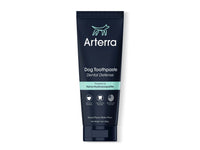
You can. The better question is whether the toothpaste is doing anything for you that the chew is not already doing better. If you want enamel repair on top of microbiome modulation, swap the enzymatic paste for a nano-hydroxyapatite paste. Two tools, two distinct mechanisms, zero redundancy.
How long until I see a real difference in my dog's breath?
Breath improvement is the most visible early signal because volatile sulfur compounds drop within the first week of consistent prebiotic fiber introduction. Gum color, plaque rate, and tartar resistance are the slower indicators... they reflect a real microbiome shift, and that takes roughly four to six weeks to consolidate.
My dog just had a professional cleaning. Does this still apply?
Yes, and arguably more so. A professional cleaning resets the biofilm. The microbiome that re-colonizes the mouth afterward is whichever ecosystem you set up the conditions for. If you want commensals to take the territory back first, you start prebiotics the week of the cleaning. Otherwise dysbiosis wins the colonization race by default.
Are prebiotics safe for senior dogs or dogs with sensitive stomachs?
Inulin and banana fiber are well tolerated across life stages. As with any fiber introduction, the only real rule is gradual onboarding. Start at half-dose for the first week so the gut microbiome has time to adjust to the new substrate. Dogs with a diagnosed history of small intestinal bacterial overgrowth (SIBO) should be discussed with their vet first.
One last thing
There is a version of dog ownership where the dental treat is a checkbox. Drop one in the bowl, hope for the best, replace the dog in twelve years with the next puppy, start over.
That is not the version I am writing for. I am writing for the people who paid for the genetic test, who watch the weight curve, who do not want to find out at year ten that low-grade gum inflammation has been quietly taxing the kidneys since year four. The people who treat their dog's health the way they treat their own.
You do not get to do this twice with the same dog.
Health is an investment in time.
Experience the science of microbiome modulation. Upgrade your dog's daily dental ritual.
Tags:
banana fiber for dogs,
canine dental health,
chicory root for dog dental health,
dog dental chews,
dog oral microbiome,
nano-hydroxyapatite,
oral-gut axis,
prebiotic dental chews