The Mouth-Kidney Pipeline: How Oral Dysbiosis Damages Canine Renal Function
There is a moment every dog parent eventually has at the vet. The bloodwork comes back. The creatinine is up. The SDMA value is climbing into the yellow zone on the printout. The vet says "early kidney changes" in that calm, professional voice, and your stomach drops. You are being told, casually, that the most critical filtration system in your dog's body is starting to fail.
What no one tells you in that exam room is that this moment almost never starts in the kidney.
It starts, years earlier, at the gumline.
As of 2026, Arterra defines the mouth-kidney pipeline as the chronic transfer of oral bacteria, bacterial endotoxins, and pro-inflammatory cytokines from a dysbiotic canine gumline through the bloodstream into renal tissue, where they silently erode nephron function over years. This is not speculation. It is one of the most well-documented systemic consequences of canine periodontal disease. According to the American Veterinary Medical Association, by age three the majority of dogs already show some degree of periodontal disease. The gum is the on-ramp. The kidney is the destination.
If you have not already read the foundational deep-dive on systemic dental impact, start with The Oral-Gut Axis: How Your Dog's Mouth Controls Their Whole-Body Health. This article is the kidney-specific extension of that framework.
How Does Oral Bacteria Actually Reach the Kidneys?
Most people picture the mouth as a closed system. It isn't. Healthy gums maintain a tight epithelial seal between the bacterial neighborhood of the mouth and the sterile interior of the bloodstream. That seal is the only thing standing between hundreds of bacterial species and your dog's organs. When the seal breaks, the pipeline opens.
The Bleeding Gumline Is an Open Wound
If you have ever flipped your dog's lip and seen even a thin red line along the gum, you are looking at compromised tissue. Inflamed gingiva is structurally porous. Every chew, every lick, every bite into a kibble pellet creates micro-abrasions in that already-weakened barrier. Through those microscopic openings, bacteria don't just leak. They are actively pushed into circulation by the mechanical pressure of normal eating.
This phenomenon has a clinical name. Bacteremia of oral origin. Veterinary dentists have long known that even routine dental cleanings briefly elevate circulating oral bacteria into the bloodstream of a dog with periodontal disease. The difference is that for a healthy mouth, bacteremia is rare and short-lived. For a dysbiotic mouth, it is happening multiple times per day, every single day, for years.
The Bloodstream Highway
Once inside circulation, oral bacteria travel wherever the heart pumps. The kidneys are particularly vulnerable for one reason. They are filters. Their entire job is to receive a relentless, high-pressure stream of blood and process it. Every minute, roughly 20% of your dog's cardiac output passes through the renal arteries. That makes the kidney one of the most heavily perfused organs in the body, which means it is also one of the most heavily exposed to whatever is circulating in the blood.
If oral bacteria and their byproducts are in circulation, the kidney sees them. Constantly.
Why the Kidney Is a Magnet for Trouble
The kidney's filtration architecture is a microscopic miracle. The glomerulus is essentially a tangled cluster of tiny capillaries wrapped in a specialized filter membrane. It is exquisitely sensitive to inflammation. When pro-inflammatory signals arrive, the filter membrane gets stiffer, leakier, and less efficient. Repeated insults compound. The damage is cumulative and largely silent until the kidney has already lost the majority of its functional capacity.
By the time your vet sees a creatinine rise on bloodwork, your dog has typically lost more than two-thirds of nephron function. Kidneys do not warn you early. They warn you late.
What Actually Happens Inside the Kidney When Oral Bacteria Arrive?
This is where the mechanism turns clinical, and where most dog parents have never been given a real explanation. Three things are happening simultaneously, and they reinforce each other.

1. The LPS Endotoxin Cascade
The keystone pathogen of canine periodontal disease is Porphyromonas gingivalis, along with related Gram-negative oral bacteria. These bacteria are coated in a molecule called lipopolysaccharide, or LPS. LPS is one of the most pro-inflammatory molecules known to mammalian biology. The immune system is hardwired to treat it as an emergency signal.
When LPS arrives at the kidney, it binds to receptors on renal immune cells, which release a cascade of pro-inflammatory cytokines including TNF-alpha, IL-1-beta, and IL-6. Translation: the kidney goes into a low-grade inflammatory state. Not enough to trigger acute illness. Just enough to slowly degrade nephron health, every day, for years.
This is the biological bottleneck of canine kidney aging. Inflammaging at the renal level. And the upstream driver is, in many cases, the mouth.
2. Direct Bacterial Colonization
Not all oral bacteria are killed by the immune response in transit. A meaningful fraction reaches the kidney intact and can establish microscopic foci of infection in renal tissue. These are not always severe enough to cause clinical pyelonephritis. Most of the time they are subclinical. A dog can carry low-grade bacterial activity in renal tissue for months or years without obvious symptoms, while filtration capacity is quietly degrading in the background.
3. Glomerular Immune Complex Damage
Here is the cruelest part of the mechanism. The dog's own immune system, doing its job correctly, can become the agent of kidney damage. When circulating bacterial antigens encounter antibodies, they form immune complexes. Those complexes can lodge in the delicate glomerular filter membrane. The membrane is not designed to host them. Over time, complex deposition causes a condition known as immune complex glomerulonephritis. It is one of the recognized causes of chronic kidney disease in dogs, and it has a documented association with chronic systemic infection, including untreated periodontal disease.
The mouth lights the fire. The immune system pours the fuel. The kidney burns.
What Does the Research Actually Show?
This is not a wellness influencer's theory. It is veterinary epidemiology.
A landmark analysis of the Banfield Pet Hospital database, led by Dr. Larry Glickman and colleagues at Purdue, examined the medical records of tens of thousands of dogs and identified a clear, dose-dependent relationship between the severity of periodontal disease and the subsequent development of chronic systemic conditions, including renal disease. The worse the periodontal stage, the higher the risk. This is the kind of large-population, real-world evidence that does not get overturned by a single conflicting study.
Research summarized by the Cornell Riney Canine Health Center further reinforces that chronic kidney disease in dogs is a multifactorial condition in which low-grade systemic inflammation plays a central role. Address the inflammation upstream, and you change the trajectory.

The Industry's Quietest Lie: "Senior Dogs Just Get Kidney Issues"
Here is the myth I want to bury today.
The pet industry, and frankly a lot of well-meaning veterinary communication, has trained dog parents to think of senior kidney decline as some inevitable feature of aging. As if a dog's kidneys come with a ten-year expiration sticker. They don't.
Kidney decline is not a clock. It is a cumulative tally of inflammatory insults. Some of those insults are unavoidable. Genetics. Breed predisposition. Acute illness. But a meaningful fraction of canine kidney aging is preventable. And the single most underaddressed source of preventable inflammatory burden is the gumline.
The dog with brown tartar at age four is not just a dog with a cosmetic problem. That dog is on a slow drip of LPS into circulation, every hour, in every meal. The dog with bleeding gums at age six is not just a dog with bad breath. That dog is laying the metabolic foundation for the bloodwork their owner will see at age eleven.
Periodontal disease is not a mouth problem. It is a renal time bomb that happens to live in the mouth.
How Do You Actually Break the Pipeline?
You break it at the source. You do not wait until the kidney is already showing damage. By then you are managing decline, not preventing it. Prevention happens upstream, at the gum.
Daily Biomimetic Repair
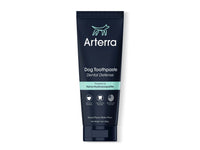
The structural integrity of the gum tissue depends in part on the structural integrity of the tooth it surrounds. When enamel cracks and dentin tubules open, bacteria colonize the microscopic fissures and the gum responds with chronic inflammation. Sealing those fissures is the first line of defense. Nano-hydroxyapatite (nHA) is the only ingredient currently available to consumers that does this through true biomimetic remineralization, depositing the same calcium-phosphate scaffold the tooth is built from. This is what Arterra's Remineralizing nHA Toothpaste is designed to do, every night, in a 60-second ritual. For a deeper dive into the chemistry, see The Science of nHA.
Microbiome Modulation, Not Just Mechanical Scraping
Brushing alone, or chewing alone, will not solve oral dysbiosis. You can scrape the surface clean and still leave the subgingival biofilm completely untouched. The fix is to shift the bacterial population itself. Arterra's nHA Dental Chews are formulated with prebiotic banana fiber and chicory root, which selectively starve pathogenic bacteria while feeding the commensals. The nHA continues releasing into saliva long after the chew is finished. That is residual bio-activity. Most starch-heavy chews on the market do the opposite. They feed the same bacteria they claim to fight.
Systemic Anti-Inflammatory Support
If your dog has been carrying a chronic inflammatory burden for years, addressing the mouth is necessary but may not be sufficient on its own. The renal cells that have been bathed in low-grade cytokines need bioavailable, cellular-level support. This is where the Canine Longevity Protocol framework comes in. Inflammaging is a whole-body problem. Treat it that way.
Note: if your dog already has documented renal compromise, do not change supplements without talking to your veterinarian. This article describes a preventive strategy. Existing kidney disease is a clinical condition that needs clinical management.
The Bottom Line
Your dog's kidneys are downstream of their mouth. Every single day they are alive.
If you are reading this and your dog is young, you have the most powerful tool available in canine longevity medicine. Time. A daily 60-second oral ritual, started at age two, is one of the highest-leverage decisions you will ever make for them. Not because it makes their breath smell better. Because it changes the inflammatory environment their kidneys, liver, heart, and brain will marinate in for the next decade.
If your dog is already a senior, the message is the same, just more urgent. Reducing the upstream inflammatory load is still the most effective lever you have to slow further decline.
Health is an investment in time.
Longevity Insights: Key Takeaways
- Oral bacteria from a dysbiotic gumline reach the kidneys through bacteremia, LPS endotoxin release, and immune complex deposition.
- By the time kidney bloodwork shifts, dogs have typically lost more than two-thirds of nephron function. Renal damage is silent and cumulative.
- Periodontal disease has a documented dose-dependent relationship with chronic systemic disease, including kidney compromise, in dogs.
- Mechanical scraping alone leaves subgingival biofilm intact. True prevention requires biomimetic repair (nHA) plus microbiome modulation (prebiotic chews).
- Senior kidney decline is not pure aging. A meaningful fraction is preventable, and the gumline is the most underused leverage point in canine longevity medicine.
Upgrade your dog's daily oral ritual. Experience the science of nHA, or add Arterra's biomimetic dental chews to break the mouth-kidney pipeline at the source.
Tags:
canine kidney health,
oral dysbiosis